


Institutional investors allocate significant time and resource to operational due diligence on external fund managers, reviewing governance, valuation policy, service provider arrangements and cyber posture. Yet one of the richest sources of insight into a manager’s financial health and operational integrity is often reviewed only cursorily, if at all: the audited financial statements.
Financial statements are not a compliance formality. Reviewed systematically, they can provide an independently verified early-warning system for emerging financial and operational risk.
We’ve previously written about why ODD needs to run on more than an annual questionnaire cycle (ODD is More Than Questionnaires), financial analysis is one of the signals that fills that gap, and it deserves a closer look on its own.
What Actually Predicts Stress
Allocators tend to focus on headline solvency ratios and stop there. In our reviews, the more useful signals sit one layer down:
- Working capital trend, not working capital level. A fund administrator with a thin but stable current ratio is a different risk profile than one whose ratio has halved over two years, even if it's still technically above one. Direction matters more than the snapshot.
- Operating cost growth relative to revenue. Persistent growth in staff and operating costs without corresponding growth in revenue can indicate pressure on margins and, in some circumstances, the capacity to maintain investment in people, systems and controls.
- Revenue concentration versus cost base. A service provider whose top clients account for most of fee income, sitting against a largely fixed cost structure, has an operating model that breaks quickly if one client leaves. This shows up in the notes, not the ratios.
- Related-party balances. Loans to or from affiliated entities, management fee waivers, or intercompany receivables that roll forward year after year without settlement. Worth an aging schedule request on their own, though they're rarely the first signal to move.
Individually, each of these is a data point. Reviewed systematically, tracked over time and considered alongside other findings, they become a pattern, and patterns are what can surface red flags before they become more significant operational concerns.
The Timing Problem Nobody Quite Admits To
Audited financials are backward-looking by design, and the lag is often longer than allocators assume. A December year-end fund may not have signed accounts available until June or July the following year, meaning the numbers being reviewed describe an organisation as it existed up to 18 months prior. An operational deterioration that began after the balance sheet date won’t appear anywhere in that document.
This is why we treat audited financials as one input with a known blind spot, not a current health check. We supplement with interim management accounts where obtainable, and we weigh recent developments; a change of auditor, a change of administrator, unexplained key-person departures, more heavily than the stated numbers when the two are in tension. A clean balance sheet from 14 months ago tells you less than a qualified opinion issued last week.
Where this sits inside a full ODD Framework
Financial statement analysis on its own tells you about solvency and reporting discipline. It does not tell you about key-person risk, IT resilience, or the segregation of duties in a middles office, which is why we never let it stand alone. Where it earns its place is as a cross-check against the qualitative findings from operational site visits and counterparty due diligence.
If an administrator’s staff describe being stretched thin during our operational interviews, and the financials separately show fee income flat against rising staff costs, that’s corroboration, two independent data sources telling the same story. Financial review rarely surfaces a risk that wasn’t hinted at elsewhere in the process; its real value is confirming or contradicting what the operational side is already suggesting.
What allocators typically miss
The most common gap we see in allocator-led reviews isn’t a failure to read the statements, it’s reading them once, at onboarding, and treating that as done. Financial health isn’t a fixed attribute of a manager or service provider; it’s a trend line, and trend lines require a second and third data point to mean anything.
The second most common gap is treating audit sign-off as equivalent to a clean bill of health. An unqualified opinion confirms the numbers are fairly presented. It says nothing about whether the underlying business model is durable. We've seen an unmodified audit opinion does not, on its own, provide assurance that an entity's operational infrastructure is resilient.
How this fits into our process
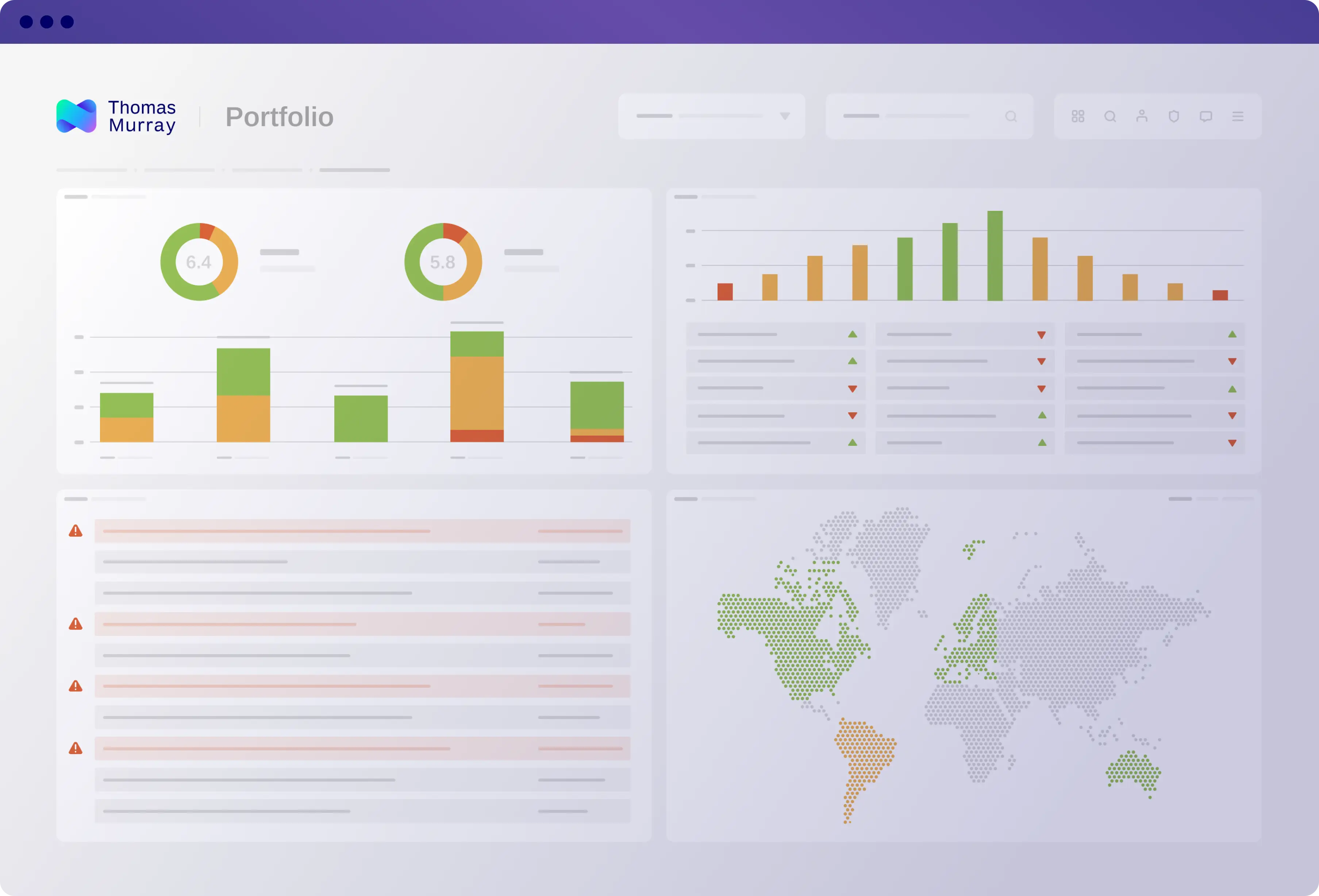
This is why financial statement analysis sits inside our Orbit Risk platform as a standing dashboard, not a one-off report filed away after onboarding. Trend analysis and red flags on fund manager financials are generated continuously and reviewed alongside entity profiles that track operational strengths and weaknesses over time, so a deteriorating working capital position or a widening expense ratio surface as a signal in its own right, rather than waiting to be rediscovered at the next annual review.
Where the financial trend and operational picture diverge, that divergence is itself a finding worth escalating, not something to resolve quietly in favour of whichever source looks more reassuring. It’s a narrower use of financial statement analysis than some allocators expect, but it’s the use we’ve found most valuable for identifying changes early enough to prompt further investigation, before they become more significant operational concerns.
Operational Due Diligence
Automate your operational due diligence with Orbit Risk technology.
Get ongoing monitoring of your investment managers, track adverse media, and receive cyber risk alerts as they happen.
Insights

Insource, Outsource or Both? Finding Your Place on the ODD Spectrum
Owning the judgement, sharing the workload: a balanced look at insourced, outsourced and hybrid ODD models.

How Often Should ODD Be Refreshed? A Practical Framework
Most allocators do a full ODD review every 12 to 36 months, but the right cadence depends on risk. Here's a practical five-step framework for deciding how often to review each manager.

What AI Actually Changes About the DDQ (and What It Doesn't)
AI is transforming DDQ workflows, but it doesn't change what a questionnaire actually is: self-reported data. Here's where the line falls, and what to ask before adopting an AI-assisted tool.

From RFP to Ongoing ODD: Closing the Monitoring Gap
RFP rigour rarely survives past manager selection. What a robust RFP process looks like, and how to close the monitoring gap that opens once it's over.