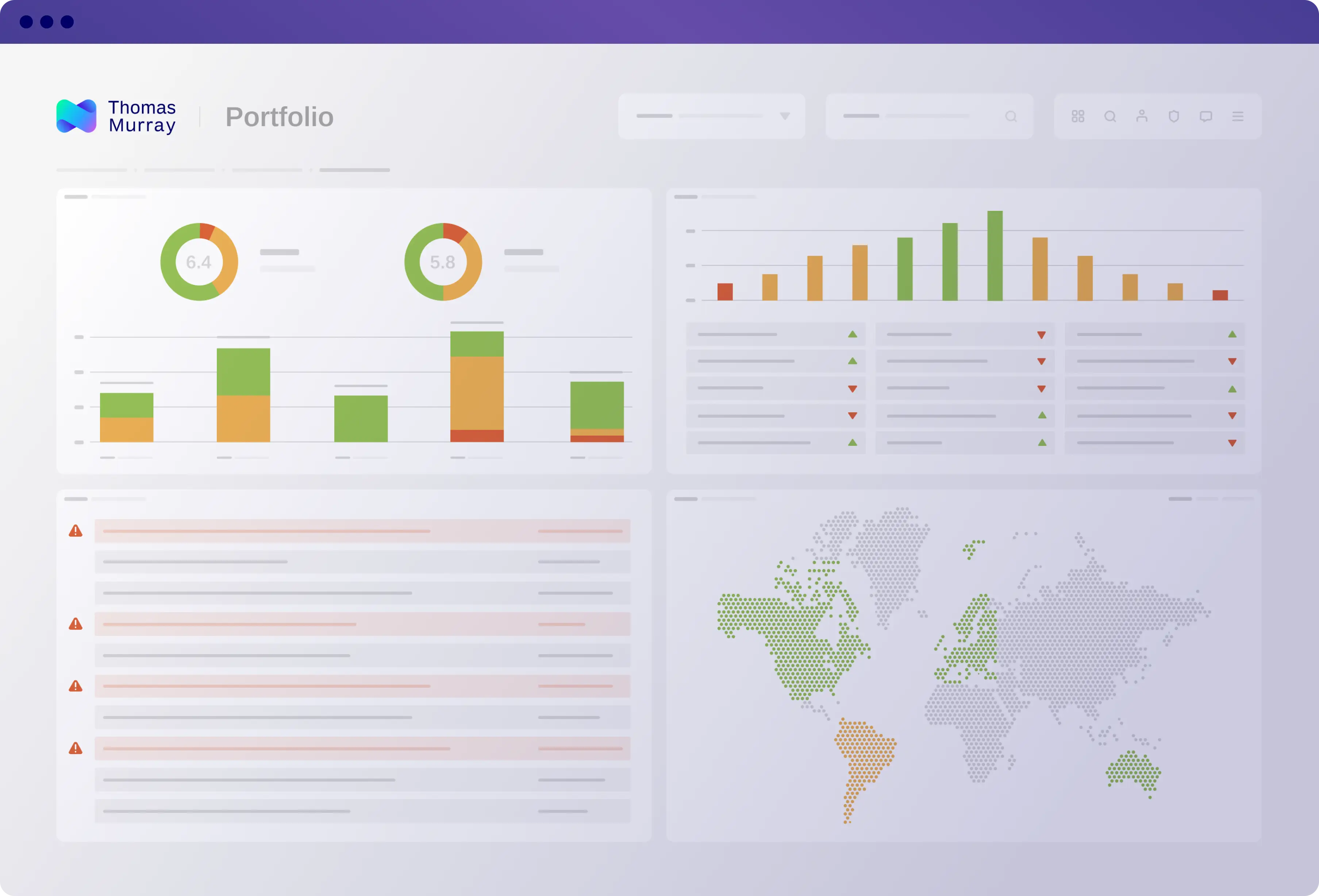
Automate your operational due diligence with Orbit Risk technology.
Get ongoing monitoring of your investment managers, track adverse media, and receive cyber risk alerts as they happen.
Ongoing ODD is how an investor keeps track of a manager’s operations between full reviews. Questionnaires remain the foundation, but they are self-reported and periodic. Financial statement analysis, cyber risk evaluations and news monitoring can show changes between reviews, so they can be followed up sooner.
For most operational due diligence (ODD) teams, the question is no longer whether to monitor managers between reviews, but how to do it without creating a second full-time workload. This guide sets out a practical approach: which sources to watch, what to do when something moves, and how to organise the work so that it fits alongside your review programme. For background on where monitoring sits in the wider manager relationship, see From RFP to Ongoing ODD: Closing the Monitoring Gap.
Why periodic reviews leave gaps
A full review is a snapshot. Its findings describe the manager as it was when responses were completed and documents gathered, which may be some weeks before the review is signed off. Many investors then set intervals of one to three years before the next full review, depending on the manager’s risk profile. We discuss how to set those intervals in How Often Should ODD Be Refreshed?.
In practice, that leaves three gaps:
-
Timing. Events that happen between reviews, such as a late audit, a security incident or a legal dispute, may only come to light at the next review, or when the manager chooses to raise them.
-
Coverage. Teams with large rosters often concentrate review effort on their highest-risk relationships. Smaller allocations can go the longest without a fresh look, even though their risk may have changed.
-
Context. When an issue does surface, it can be hard to tell whether it is new or long-standing without interim information to compare against.
Ongoing ODD is not about rerunning the full review continuously. It is about knowing when the next conversation with a manager should happen and arriving at it with the right questions.
Three independent sources to watch between reviews
Each of the sources below comes from outside the questionnaire and updates on its own timetable. None is conclusive on its own; together they give a fuller picture of how a manager’s position may be changing.
Financial statements
The audited accounts of the manager and its funds offer a quantitative view that does not depend on how a manager chooses to answer a question. Between reviews, the direction of travel matters more than any single figure: revenue becoming more concentrated, costs growing faster than income, cash falling relative to operating expenses, accounts filed late, a change of auditor or a modified audit opinion. The limitation is age: audited accounts can be many months old by the time they are available, so they work best as a trend rather than a current health check. Financial Statement Red Flags: An Operational Due Diligence Perspective covers what to look for in more depth.
Cyber risk
A cyber risk evaluation provides an external view of a manager’s internet-facing exposure, independent of the manager’s own description of its controls. Changes worth noting include a marked fall in a security rating, newly exposed services or an issue affecting one of the manager’s critical third parties. An external view cannot see internal controls, so a lower rating is a reason to ask a question rather than a conclusion in itself. See Why Cyber Risk Belongs in Operational Due Diligence for more.
News and media
News is usually the fastest-moving of the three sources. Items to watch include litigation, regulatory action, adverse coverage, reported departures of senior staff and disputes with service providers. The challenge is volume: without curation and relevance filtering, news feeds quickly become noise. We look at how to separate signal from noise in Media Monitoring as an ODD Signal.
What to do when something changes
Not every alert needs action. A simple three-level response helps keep effort proportionate.
-
Note it. Log the change and carry it into the next scheduled review. This suits minor movements, such as a small fluctuation in a security rating or a passing mention in the press.
-
Follow up. Send the manager targeted questions with a clear response date. Useful questions include: what happened, and when? What is the impact on the fund and its investors? What has changed as a result? If relevant, why was it not raised with investors at the time?
-
Bring the review forward. Consider an early full or partial review when a change goes to the heart of the original assessment, when follow-up answers are incomplete or inconsistent, or when several signals point in the same direction at once.
Whichever level applies, record the alert, the decision and the reasoning. A consistent record helps you explain decisions to an investment committee and builds a history to compare against at the next review. Raising questions promptly and constructively also tends to make for better conversations with managers than holding issues back until the formal review.
An illustrative example
Consider a mid-sized private equity manager that completed a full review eighteen months ago with no significant findings. Its next review is scheduled for the following year.
In the spring, the manager’s audited accounts arrive later than in previous years. On their own, late accounts are worth noting but not alarming. A few weeks later, trade press reports that the firm’s long-standing finance director has left. The two items together prompt a follow-up: the ODD owner asks the manager about the reasons for the delay, who now leads the finance function, and whether the change has affected fund reporting or service provider oversight.
The manager’s answers are prompt and complete: the delay reflected a planned system migration, and an experienced interim lead is in place with a permanent hire under way. The ODD team records the exchange, keeps the scheduled review date and adds the finance function as a focus area for that review. Had the answers been vague, or had a third signal appeared, bringing the review forward would have been a reasonable next step.
This is a composite scenario for illustration and does not describe a specific manager.
Setting it up: which managers, which alerts, who owns follow-up
Start from a baseline
Monitoring is most useful when there is something to compare against. Before switching on alerts, record each manager’s position at its last full review: key findings, open actions, the latest financial picture and its cyber profile at that point. Changes can then be read against what you already know, rather than in isolation.
Which managers
If you can, cover the whole roster: the managers who receive the least attention between reviews are often the ones where monitoring adds most. If you need to prioritise, consider allocation size, strategy complexity, reliance on outsourced service providers, open findings from the last review and time since the last full review. Managers you are considering for a new allocation can also be added before a decision is made.
Which alerts
Agree thresholds for each source before monitoring begins, and aim for fewer, more relevant alerts rather than comprehensive ones. A starting framework might look like this:
| Source | Example alert | Typical first response |
| Financial statements | Accounts filed late; modified audit opinion; sharp change in cash or revenue | Request explanation and latest management accounts |
| Cyber risk | Significant fall in security rating; newly exposed service | Ask what the manager is aware of and what action is planned |
| News and media | Litigation, regulatory action or reported senior departure | Confirm facts and ask about the impact on the fund |
Thresholds should be reviewed periodically. If a source produces alerts that rarely lead to follow-up, tighten it; if issues reach you through other routes first, widen it.
Who owns follow-up
Give each manager a named owner, agree an escalation route to the Head of ODD or Risk and, where appropriate, the investment committee, and set internal targets for how quickly alerts are reviewed. Coordinate with investment teams so that the manager receives one consistent set of questions rather than several overlapping ones. For family offices and smaller teams, ownership may sit with one person supported by external help, which makes clear thresholds even more important.
Where technology and a managed services team fit
Technology does the gathering. A monitoring platform can bring financial, cyber and news information together in one place for each manager, issue alerts against the thresholds you set, and keep that history alongside questionnaire responses so that any change can be compared with the original assessment.
A managed services team adds capacity. Analysts can review alerts, separate relevant items from noise, draft follow-up questions and support reviews that are brought forward. This is particularly useful where the roster has grown faster than the team.
Neither replaces the investor’s own judgement. Decisions about whether a change matters, and what to do about it, stay with you; the aim is to make sure you have the information to make them in good time.
Orbit Risk combines both. The platform brings questionnaire-based red-amber-green assessments, proprietary cyber risk evaluations, curated news feeds and alerts, and analysis of fund and manager financial statements together in entity-level profiles, supported by Thomas Murray’s managed services team.
Frequently Asked Questions
What is the difference between ongoing ODD and continuous ODD?
The terms are often used interchangeably. Both describe tracking a manager’s operations between full reviews. “Continuous” usually refers to automated sources, such as news alerts or cyber ratings, that update as information changes, while “ongoing” can also include periodic checks such as reviewing new audited accounts each year.
Does Ongoing monitoring replace the periodic review?
No. The periodic review, built on a questionnaire, documents and discussion with the manager, remains the foundation. Ongoing monitoring helps decide when the next conversation should happen and what it should cover, and may lead you to bring a review forward.
Is ongoing ODD practical for smaller teams and family offices?
Yes, if it is scoped carefully. Start with the managers that matter most to you, keep alert thresholds tight, and be clear who follows up. Technology and managed services can add capacity where in-house resource is limited.